Buying guide
Plug-in diffusers ranked: 1 clear winner and an honest look at the field
The plug-in is the most bought and least examined format in home fragrance. Tom Ellery ranks the field, does the running cost sums, and explains where a plug-in is the wrong buy entirely.

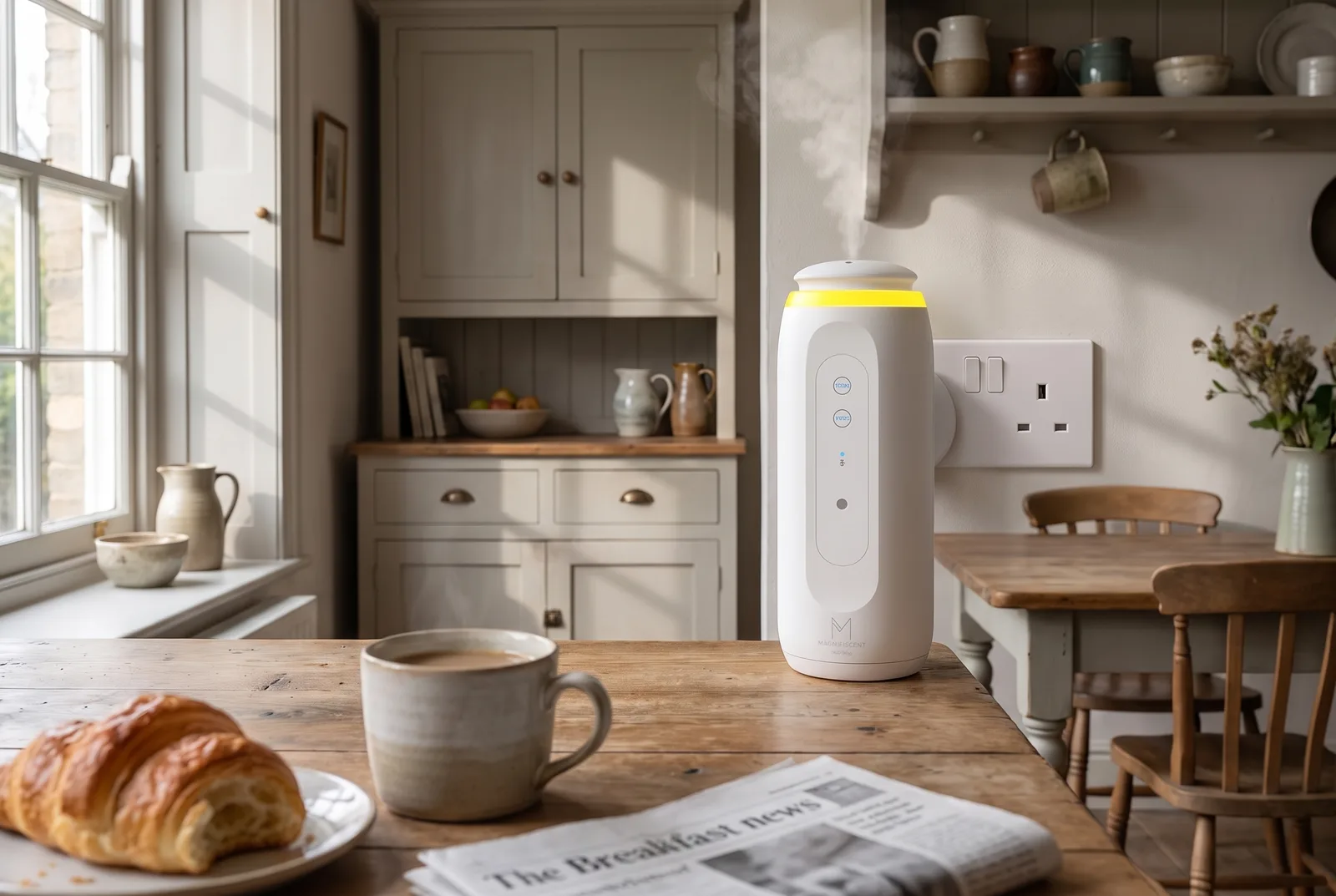
Nobody reviews plug-in air fresheners. Walk the household aisle of any supermarket and there they are, a whole shelf of them, yet the review pages of this industry treat the format as beneath comment. That is snobbery, and snobbery is bad analysis. The plug-in is the format an awful lot of people actually live with, and it deserves the same treatment we give the serious nebulisers: what does it cost to buy, what does it cost to keep, and what actually comes out of it.
This ranking covers socket-mounted diffusers, the kind that hang off the wall plate itself with no cable and no footprint. Tabletop machines that merely plug into the mains are a different category with different rules; they live in our guide to the best waterless diffusers in the UK.
Why the obsession with the weekly number? Because this is the format where the purchase price misleads most. A diffuser on a shelf gets switched off, moved, eventually retired to a cupboard. A plug-in disappears into the wall and runs on habit, week after week, so the running cost compounds quietly in the background of your bank statement. Cheap to buy and dear to keep is the oldest trick in retail, and car dealers built the entire finance office on it.
1 rule of the house before we start, because it applies to every entry here including the winner: no plug-in diffuser belongs in a bedroom. More on that at the end.
 The winner 4.7
 1.Magnifiscent ZenPlug
- Best
- Plug-in diffuser, full stop
- Type
- Waterless cold air nebuliser, socket mounted
- Control
- Bluetooth app
- Running cost
- £1.33 to £2.00 a week from 150ml bottles
- Warranty
- 12 months
Why we love it
- Real cold air nebulisation hanging off a wall socket
- From £1.33 a week fed from 150ml bottles
- 5 stars from The Independent's IndyBest
Take note
- Scents whichever room the socket is in
- Never for bedrooms, and that includes this one
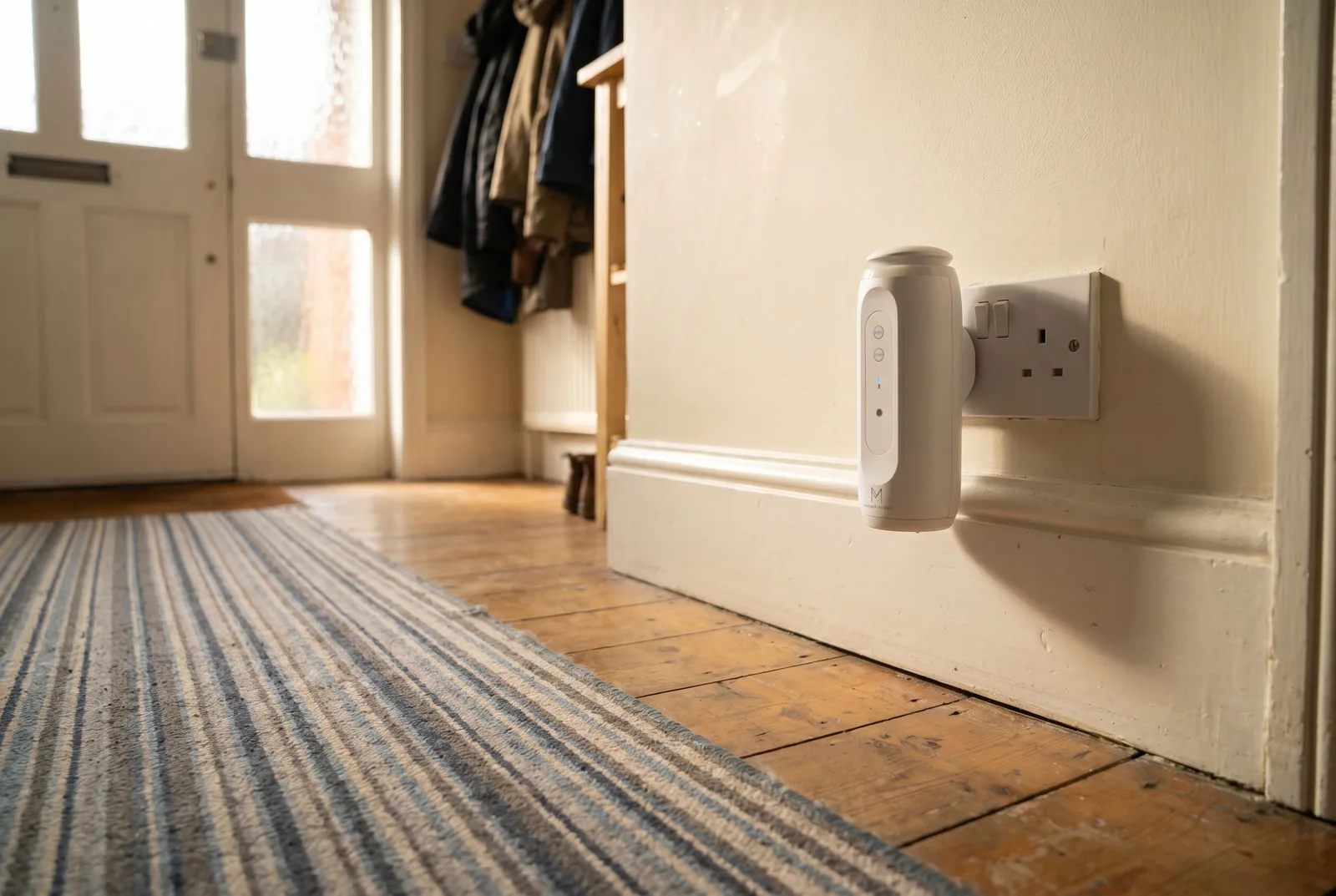
The ZenPlug is £65 and it is the only waterless cold air nebulising plug-in in our test set. That sentence decides the ranking, so it is worth unpacking.
Before the unpacking, a data point from outside this site: The Independent's IndyBest tested the field this year too, gave the ZenPlug 5 stars, and called it the best plug-in air freshener for a five star hotel feel. Different tester, different house, same podium.
Cold air nebulisation takes fragrance oil and breaks it into a fine dry mist without water or heat. It is the same technology Magnifiscent puts in its £349 Monolith and the same approach the commercial scenting trade uses, shrunk onto a wall socket. No water, no wicks, no heating element cooking the fragrance into something flatter and cheaper than what went in the bottle. Control is through a Bluetooth app, it comes in black or white, and it carries a 12 month warranty.
Now the sums, because this is where the ZenPlug wins twice. Magnifiscent says a 20ml fill lasts 4 to 6 weeks depending on settings. Its standard oils are £39.99 for 50ml, £59.99 for 150ml and £139.99 for 500ml, which per 10ml is £8.00, £4.00 and £2.80. Buy the 150ml bottle and a 20ml fill costs £8.00, so the running cost is £1.33 to £2.00 a week. Commit to the 500ml and the fill drops to £5.60, between 93p and £1.40 a week. Even feeding it from the small 50ml bottle, the dearest sensible option, you top out around £4.00 a week. There is no subscription and no proprietary cartridge, and you can change oils whenever the mood takes you.
Living with it is pleasingly dull, which is the point of the format. You fill it, set the app and forget it. There is no daily water ritual, nothing on a shelf gathering dust, and the scent meets visitors at the front door before the machine is ever spotted.
The honest limits: it scents whichever room your socket is in, at whatever height the electrician chose, and it occupies that socket permanently. And it does not go in bedrooms, ever, for reasons below. Within those limits it is the best thing that has happened to this format.
Prices may vary. Checked on the publication date.
2. The heated incumbents: Air Wick, Glade and the supermarket shelf
Ranked second as a category, because they work, they are everywhere, and pretending they do not exist would make this list a coronation rather than a ranking.
The traditional plug-in is a small electric heater that warms a cartridge of synthetic fragrance, either a liquid reservoir with a wick or a solid scented block, and lets convection do the rest. The strengths are real. They cost very little to try, they are stocked everywhere groceries are sold, and there is no learning curve beyond pushing the thing into the socket. Credit where due, they are also flame free, which already makes them a safer way to scent a hallway than anything you have to light. Think of them as the base spec rental car of scenting: they do the job while making quite sure you never mistake them for something you chose.
The weaknesses are just as real, and they are the reason this category sits second rather than first. Heat is a blunt instrument: warming a fragrance narrows it, flattens the quieter notes, and adds that unmistakable warm plastic undertone that makes every heated plug-in smell like a cousin of every other heated plug-in. The scent choice is a wall of near identical synthetic bouquets. Control usually amounts to a dial, if that. And the refill treadmill is the actual business model: the unit is cheap the way a razor handle is cheap, and the refills quietly become a standing order. I am deliberately not quoting shelf prices here, because supermarket promotions move week to week and any number I print would be wrong by Friday. The shape of the deal is what matters, and the shape is: cheap to start, dear to keep, with a ceiling on how good it can ever smell. There is a quieter cost too. A heated unit meters out the same cartridge at the same rate until it dies, so the room smells identical at breakfast and bedtime, and your nose stops registering it within days.
If your total budget is the price of a couple of refill packs, they remain the honest choice. If you can stretch to the ZenPlug, the arithmetic above says the gap closes within the first year and the air in your hallway is better every day of it.
3. The budget waterless plug-ins we have not tested yet
2 entries at the cheap end deserve a mention without a ranking, because we have not run either of them and I do not score machines from their product pages. Sandal Bloom lists a plug-in called the Luméa at £39.99, and Scandiscents sells a plug-style diffuser called the Oslo at £20. Both brands publish very little spec for these units, so there is not much arithmetic to do yet. For what the brands are like to deal with more broadly, our Sandal Bloom Valere review covers the former, and the latter earns goodwill from the excellent Scandiscents Halo, our budget pick in the main guide. If either plug-in crosses the test desk, this list gets updated.
Where a plug-in is the wrong answer
Bedrooms. This is the big one, and it includes our winner. We do not recommend any plug-in diffuser for bedrooms, the ZenPlug included. A bedroom wants scent placed deliberately, close to the bed, running low and quiet, and a socket-mounted unit surrenders all of that to wherever the socket happens to be, which in most bedrooms is behind the headboard or under the window. Buy something you can position instead. The ScentFlow is a compact rechargeable unit built for the bedside table, the NovaMist is a battery powered tower with a remote that earns its shelf space, and the LumaMax is the answer for a large master bedroom if the budget stretches.
Big open plan spaces. A socket puck at skirting board height is not going to carry a knocked-through kitchen diner, whatever any brand’s coverage claim says. For genuine reach you want a machine designed for it: the LumaMax review covers our large space pick, and the full field is in the best waterless diffusers guide.
Socket-poor rooms. Obvious but worth saying: a plug-in occupies its socket every hour of every day. If the hallway has 1 double socket serving the lamp, the phone charger and the vacuum cleaner, the maths of convenience collapses before any fragrance leaves the nozzle.
The verdict
If you want a plug-in diffuser in 2026, buy the ZenPlug and feed it from 150ml bottles, which puts the habit at £1.33 to £2.00 a week for scent that actually resembles the oil you paid for. The heated supermarket incumbents remain the cheap and cheerful fallback, honest about nothing except their price tag. And if the room you are trying to scent is a bedroom or a barn of an open plan space, a plug-in is the wrong tool entirely, no matter whose name is on it.
Whichever way you go, buy the scent, not the gadget. The machine is only ever a delivery mechanism for the oil, and the oil is where the weekly money actually goes.
Start with the full ZenPlug review, or see the whole market in the 7 best waterless diffusers in the UK.
Frequently asked questions
Can you leave a plug-in diffuser running all the time?
The format is designed for it, and the good ones give you control over how. The ZenPlug runs on app schedules, so it can work the hours your hallway actually has people in it rather than metering out scent around the clock. Heated supermarket plug-ins run flat out until the refill dies, which is part of why you stop smelling them within days.
Are plug-in diffusers safe for bedrooms?
We do not recommend any plug-in diffuser for bedrooms, including our winner. Bedroom scent wants to be placed deliberately, close to the bed, running low, and a socket mounted unit surrenders placement to wherever the socket is, which is usually behind the headboard or under the window. Buy a unit you can position instead: the ScentFlow for the bedside table or the NovaMist for a shelf near the bed.
What do plug-in diffusers cost to run?
For the ZenPlug the arithmetic is published: a 20ml fill lasts 4 to 6 weeks on the brand's own claim, and fed from a £59.99 150ml bottle that works out at £1.33 to £2.00 a week. Supermarket refill prices move week to week with promotions, so we do not print them, but the shape of that deal is fixed: the unit is cheap the way a razor handle is cheap, and the refills quietly become a standing order.
What is the difference between the ZenPlug and a supermarket plug-in?
Heat. A traditional plug-in warms a cartridge of synthetic fragrance, and warming a fragrance narrows it, flattens the quieter notes, and adds the warm plastic undertone every heated plug-in shares. The ZenPlug uses cold air nebulisation instead, the same approach as commercial scenting machines, so what reaches the room is the oil as blended rather than a cooked version of it.